David Smalling
Elizabethan Collar
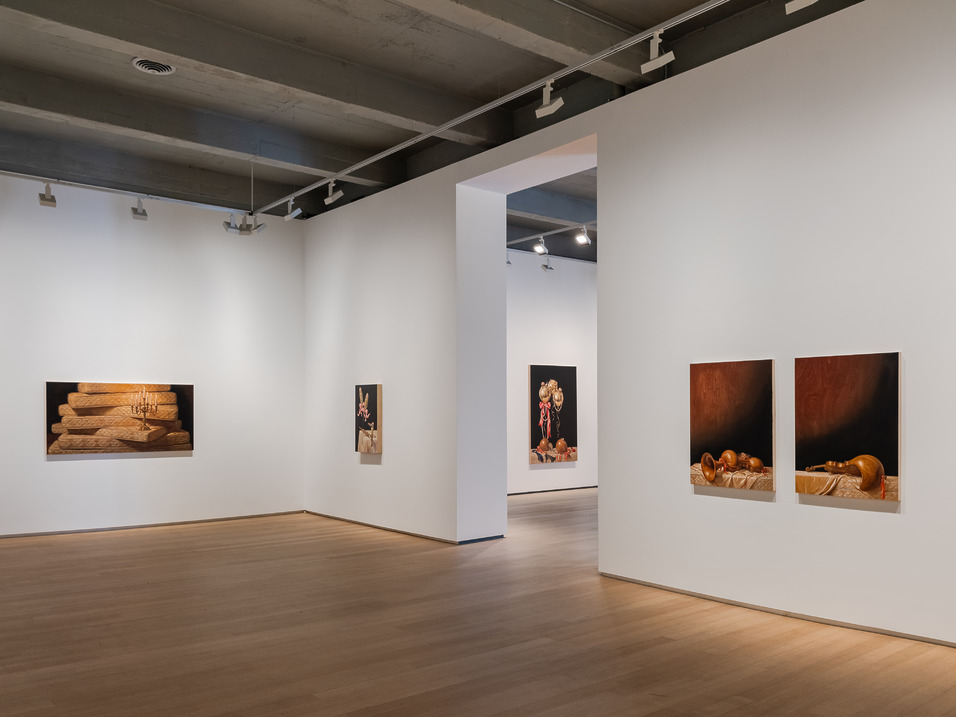
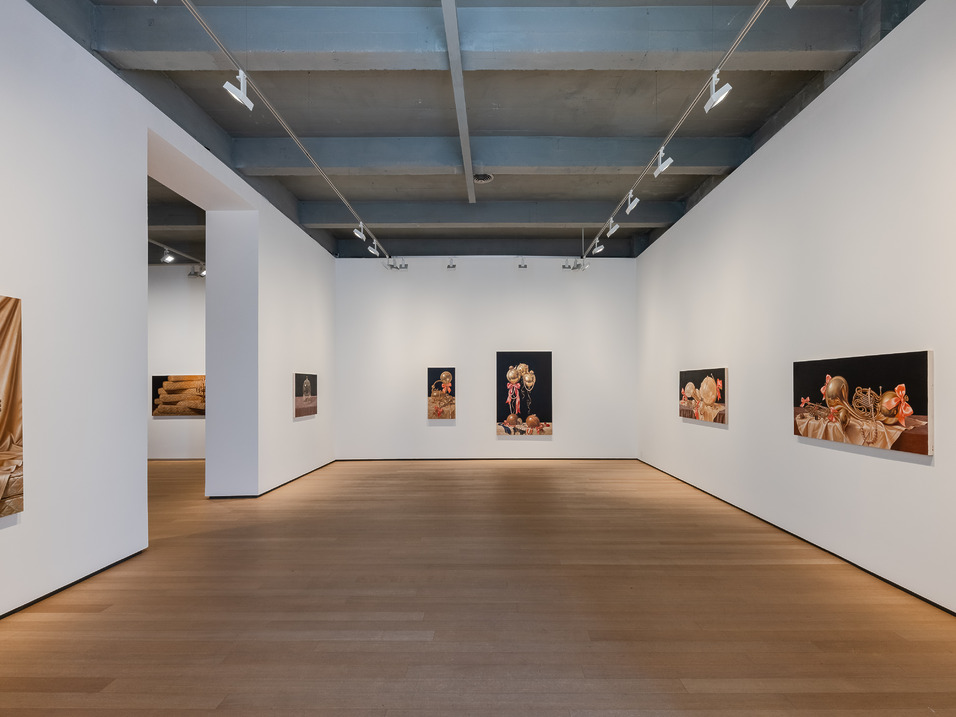
Templon New York presents Elizabethan Collar, David Smalling’s first exhibition with the gallery.


Smalling’s painting practice examines how cultural hierarchies and taboos shape identity, through the visual language of the Old Masters. Smalling approaches the canvas as a diagnostic instrument—a site to unravel the invisible architectures of shame, desire, and social compliance.
Born in 1987 in Kingston, Jamaica, Smalling lives and works in New York. He studied Mathematics at Yale University, where he also trained at the Yale School of Art, and holds a Ph.D. from Harvard University. Drawing from the tradition of Mannerism and the Dutch Golden Age, he examines how contemporary social codes and gender norms shape identity and behavior. Through meticulous domestic and ceremonial scenes, he explores themes of belonging, aspiration, and restraint.
Operating with a rigorous understanding of structure, temporality, and systems, his paintings reconstruct—and actively undo—the illusions embedded within classical painting, reinventing the memento mori as a stage upon which inherited decorum begins to fracture.
The exhibition of all new paintings on wood panels takes its title from the Elizabethan collar, the veterinary device colloquially known as the “cone of shame”—a protective apparatus designed to prevent an animal from tearing at its own sutures. The collar, as depicted in Cone of Shame, becomes a metaphor for conditional belonging: entry into a space that promises safety and prestige while quietly limiting autonomy.
Throughout the exhibition, Smalling examines what happens after access—after entry into elite or aspirational spaces has been granted, but before true agency materializes. Carefully arranged objects of domestic interiors—the dinner table, the silver platter, the silk mattress—function as stages for this negotiation. In works such as The American Bride and Anniversary, the table becomes an altar of sacrifice, staging the uneasy choreography between the feast’s host and the outsider. In works like Mouthpiece and Follicular, the tabletop gives way to a bed, shifting the focus from public ritual to private reckoning. The mattress replaces the nude—an evocation of sexuality and vulnerability without explicit display. It introduces an atmosphere of intimacy tinged with self-awareness, even self-deprecation, particularly in its treatment of masculinity and the internalized male gaze.
Embedded within these scenes are layered symbols of heteronormative expectation. Pearls, lipstick, ribbons, and a garter belt mark the implied presence of a woman, even when she remains out of frame. They operate less as decoration than as signifiers—tokens of a prescribed femininity that feels inherited rather than chosen. Opposite them, violins and brass horns, traditionally associated with virtuosity, carry their own symbolic weight, evoking discipline, mastery, and masculine performance. Yet in Smalling’s paintings, these instruments appear deformed. They swell, bend, and constrict as if subject to internal pressure. Their pneumatic distortions and choke points suggest bodies—or identities—straining to occupy incompatible roles at once.
Amid the hyper-articulation of material wealth, the snail—drawn from the codified lexicon of the Dutch Golden Age—operates as a silent, viscous disruption. Morphologically, it embodies contradiction: the geometric perfection of its calcified shell, set against the abject softness of its body. The faint, glistening trace it leaves behind becomes a marker of duration—a subtle measure of time and the gradual erosion it brings. Within otherwise pristine compositions, the creature emerges as a harbinger of decay, a reminder that no matter how carefully we construct our gardens, something is always feeding in the undergrowth.
If the tradition of Vanitas painting once framed mortality within a fixed moral order, Smalling’s adaptation reveals a world whose codes have aged even as they continue to structure behavior. Elizabethan Collar is a meditation not only on the passage of time, but on inherited roles that no longer correspond to lived experience. Within lacquered surfaces and artificial light, the artist searches for a form of honesty embedded in artifice—inviting viewers, particularly those comfortable within such systems, to recognize their own reflection.

Follicular

The artist

Born in 1987 in Kingston, Jamaica, David Smalling lives and works in New York City. He studied Mathematics at Yale University, where he also trained at the Yale School of Art, and holds a Ph.D. from Harvard University.
Drawing from the tradition of Mannerism and the Dutch Golden Age, Smalling’s paintings examine how contemporary social codes and gender norms shape identity and behavior. Through carefully constructed domestic and ceremonial scenes, he explores themes of belonging, aspiration, and restraint, questioning the roles we inherit and perform.