Iván Navarro
Light Years
Templon New York presents Iván Navarro: Light Years, a chronological overview of the artist’s work from 2004 onward. Conceived as an anniversary exhibition, Light Years marks a double milestone: the gallery’s 60th anniversary and over twenty years of collaboration with Iván Navarro.


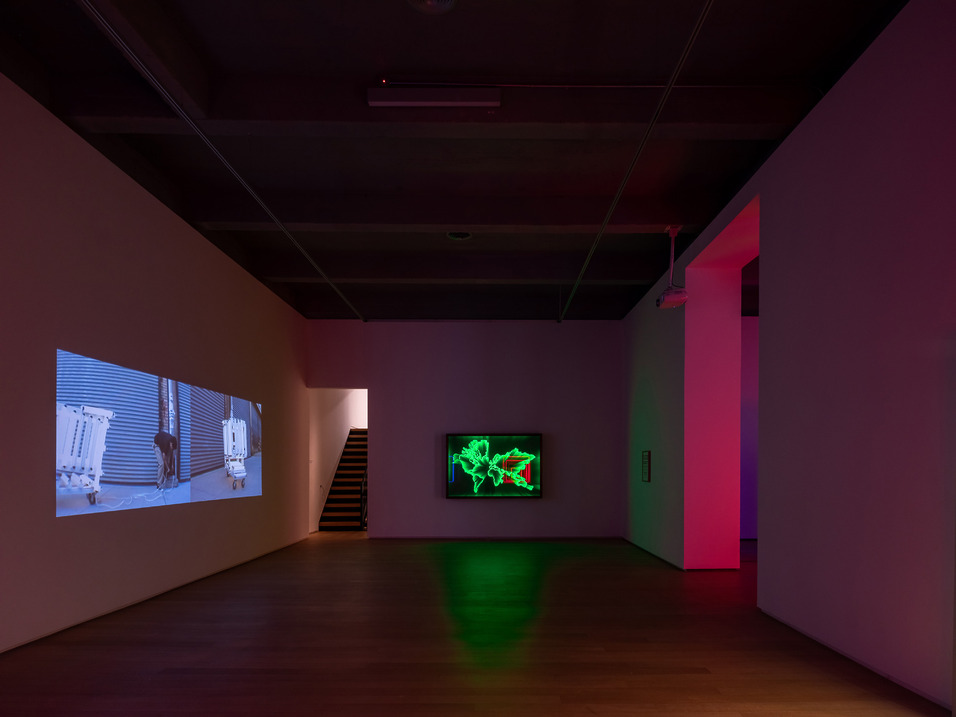
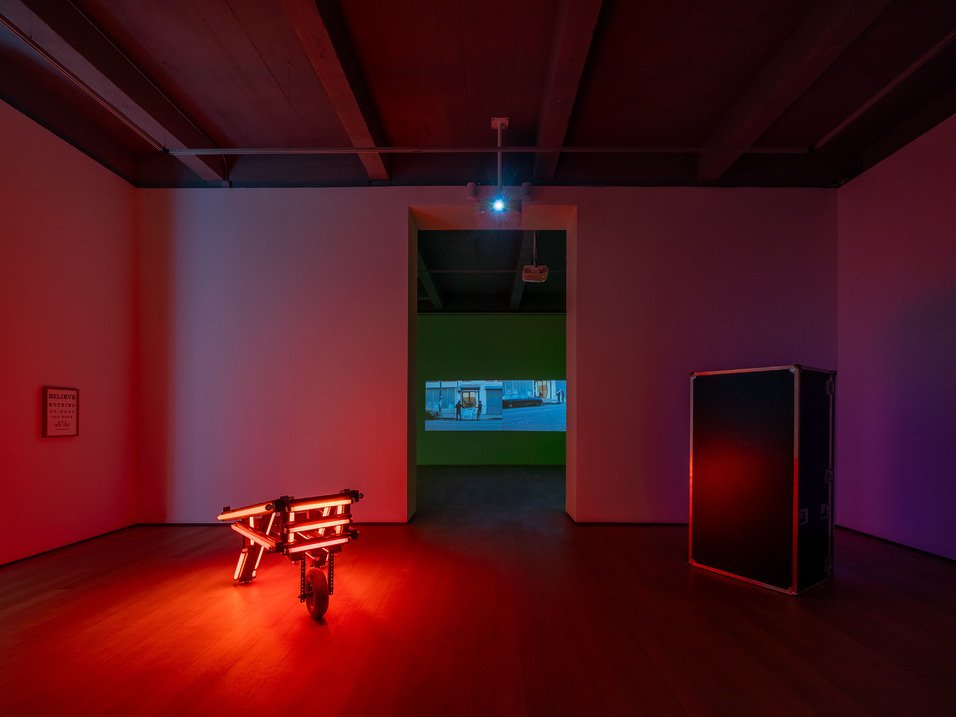
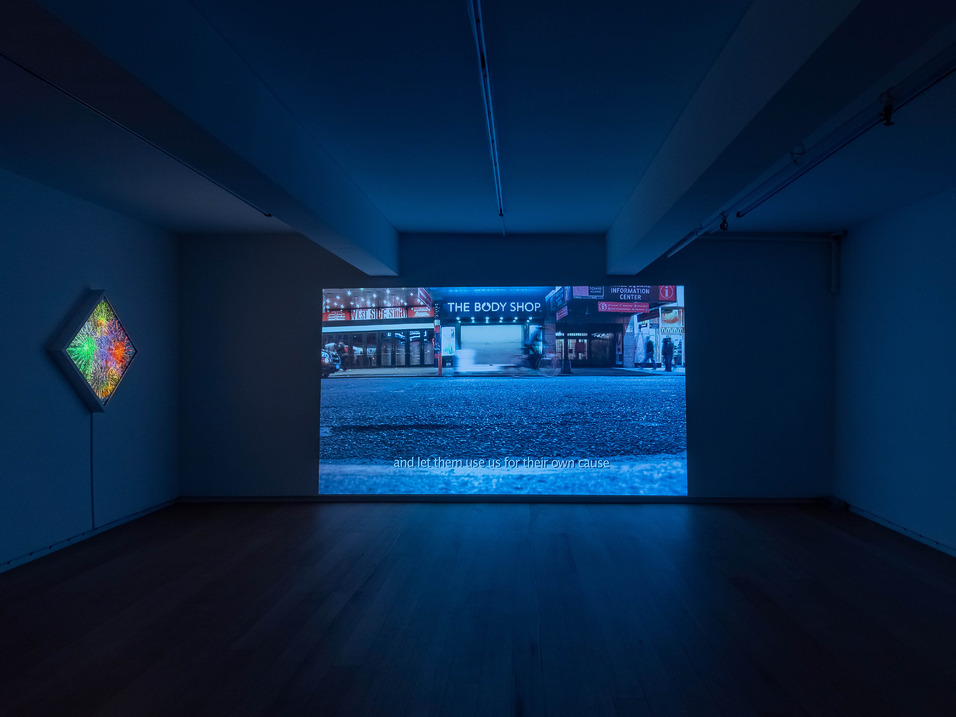
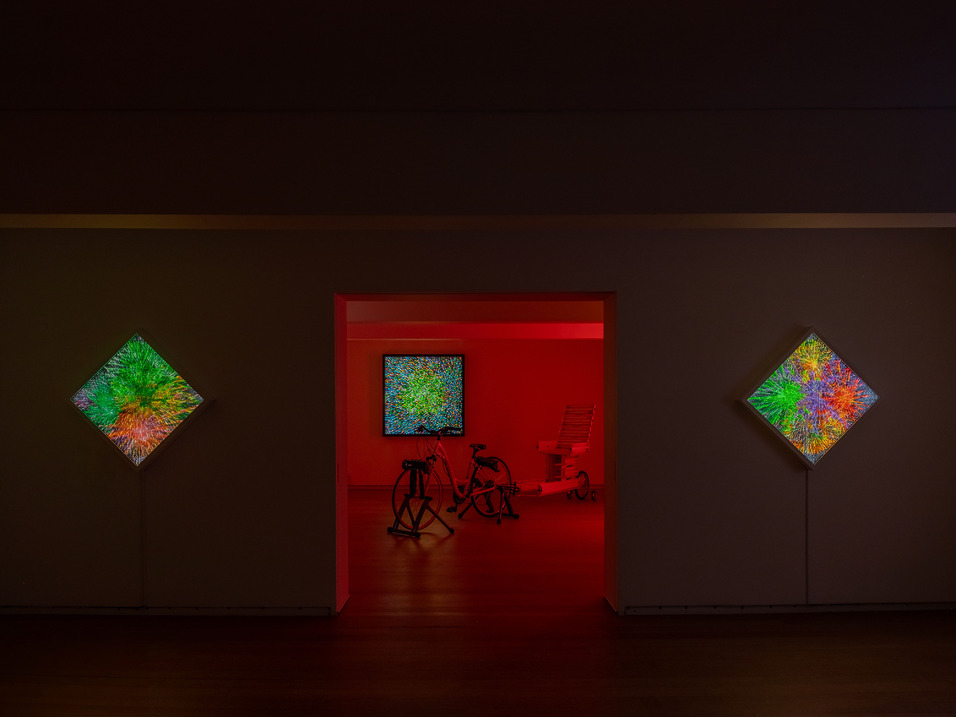
The exhibition is structured around three foundational works that function as conceptual vehicles: Landless Land (2023), Flashlight: I’m Not From Here, I’m Not From There (2006), and Resistance (2009). Envisioned as electrically animated sculptures activated through movement and video performance, these works form the core of Navarro’s practice.

The exhibition is structured around three foundational works that function as conceptual vehicles: Landless Land (2023), Flashlight: I’m Not From Here, I’m Not From There (2006), and Resistance (2009). Envisioned as electrically animated sculptures activated through movement and video performance, these works form the core of Navarro’s practice. Their titles—borrowed from electrical terminology—ground metaphor in material reality and signal the artist’s strategy of diverting utilitarian objects into political and existential instruments.
The exhibition begins with Landess Land, a 2023 silent reprise of the original 2004-2005 work Homeless Lamp, The Juice Sucker, now in the collection of the Solomon R. Guggenheim Museum in New York. Light becomes a condition of survival rather than illumination, a metaphor for hope and displacement. Produced around the same time, Blue Electric Chair (2004) introduces the first major pillar of Navarro’s work: political resistance. By transforming an object associated with state violence into a luminous structure, the work pays homage to modern furniture design while confronting systems of power, punishment, and control.
Flashlight: I’m Not From Here, I’m Not From There, in the collection of the Hirshhorn Museum in Washington, D.C., explores territorial identity and unstable belonging, activated by the body and narrated through video. In Resistance, first exhibited at the 53rd Venice Biennale in 2009 and now in the collection of the Nuevo Museo de Santiago, Chile, electricity is generated through physical effort, literalizing opposition as friction within systems of power. These three projects are set to songs that illustrate the artist’s investigation of lyricism as a deep component of his practice. That same year, Drums (2009) explores another essential pillar of Navarro’s practice: music as a political and social tool. Incorporating percussion as a sculptural and performative element, the work activates the sound of silence as a collective force.
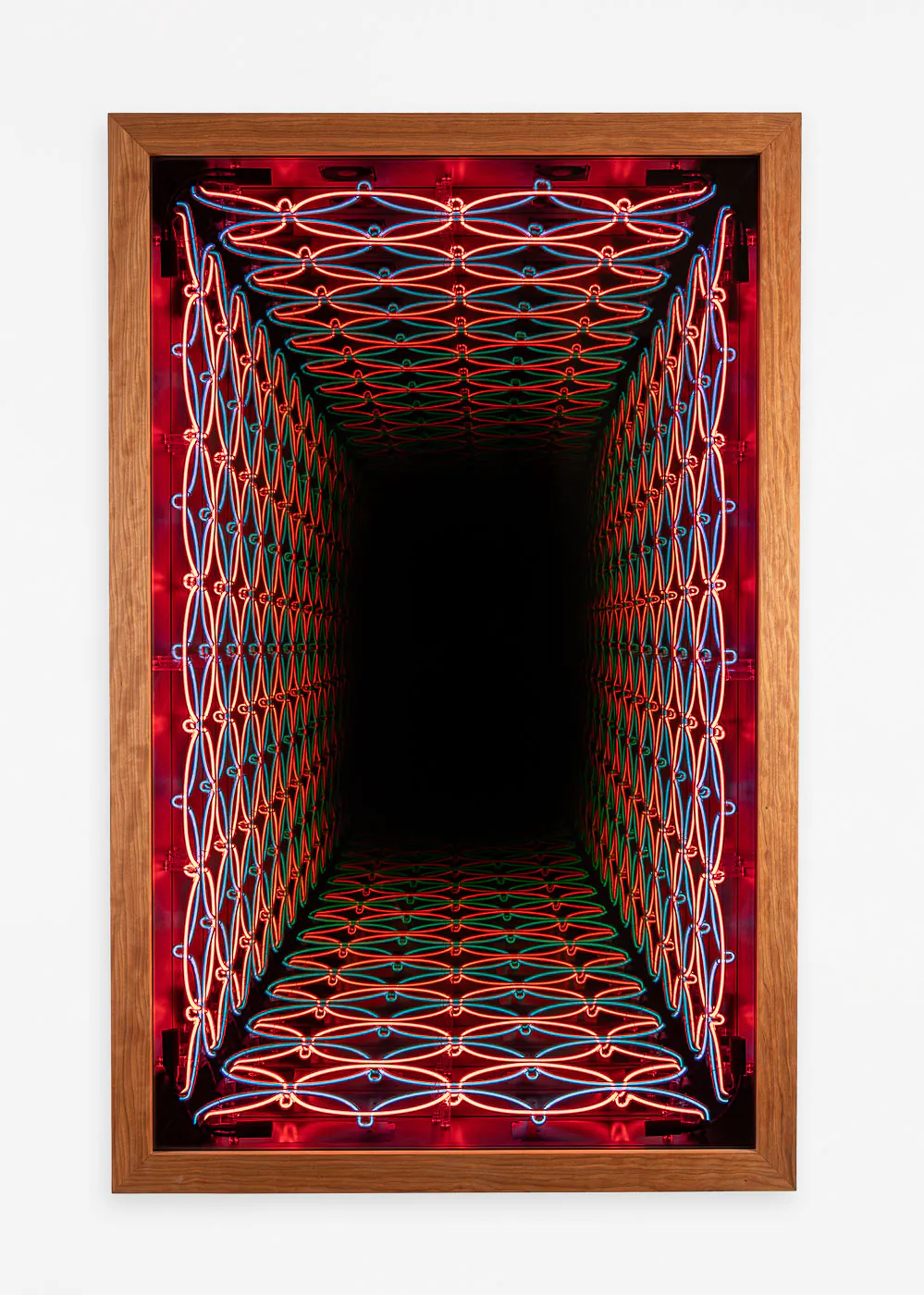
Alongside these works, a constellation of 23 pieces—ranging from the Shell Shock series (2024–2025) to a tribute to Josef Albers and Francisco de Goya (Esto Es Malo, No Se Puede Mirar [This is Bad, One Can’t Look], 2013)—extends the exhibition’s narrative. Installations employing the infinite mirror motif introduce another recurring metaphor, the mirror as a reflection of our experience of the world: endless, unstable and in constant surveillance. The use of one-way mirrors in Navarro’s work also draws from interrogation rooms in police stations. Influenced by Op Art and concrete poetry, these works form a visual language that invites visitors to observe, feel, question, and listen.
Light Years reflects Navarro’s international recognition, with works held in numerous major collections, including the Bronx Museum, Bronx, NY (USA); the Nelson-Atkins Museum of Art, Kansas City, MO (USA); the Museum of Fine Arts, Boston, MA (USA); the Fonds National d’Art Contemporain, Paris, (France); the Thyssen-Bornemisza National Museum, Madrid (Spain); Fundación Arco, Madrid (Spain); Museu Nacional de Belas Artes, Rio de Janeiro (Brazil); the National Museum of Modern and Contemporary Art, Seoul (South Korea); and the National Gallery of Victoria, Melbourne (Australia), among others.
Polka

The artist

Born in 1972 in Santiago, Iván Navarro grew up under the Pinochet dictatorship. He has lived and worked in New York since 1997. Iván Navarro uses light as his raw material, turning objects into electric sculptures and transforming the exhibition space by means of visual interplay. His work is certainly playful, but is also haunted by questions of power, control and imprisonment. The act of usurping the minimalist aesthetic is an ever-present undercurrent, becoming the pretext for understated political and social criticism.