Oda Jaune
Once in a Blue Moon
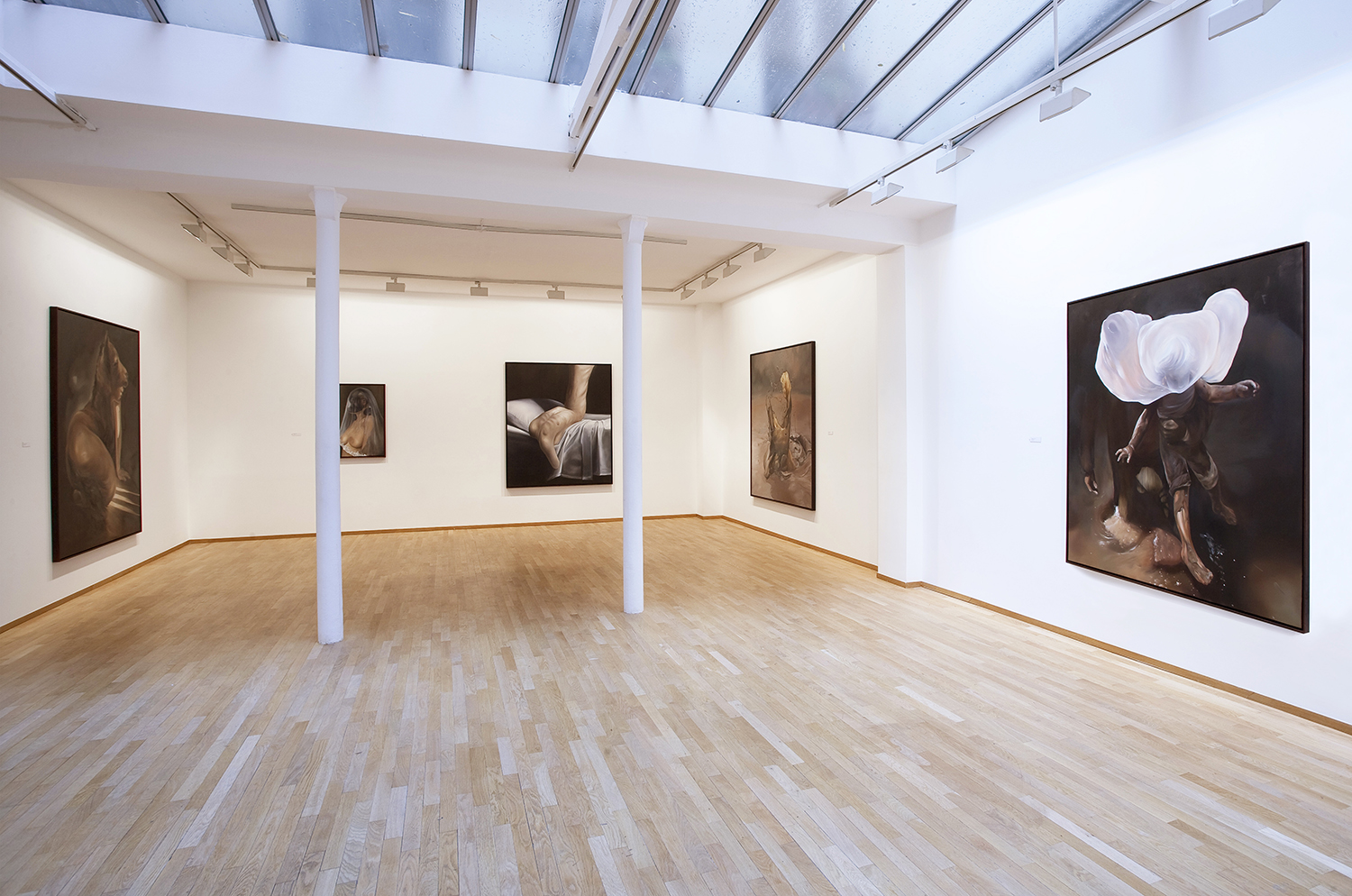
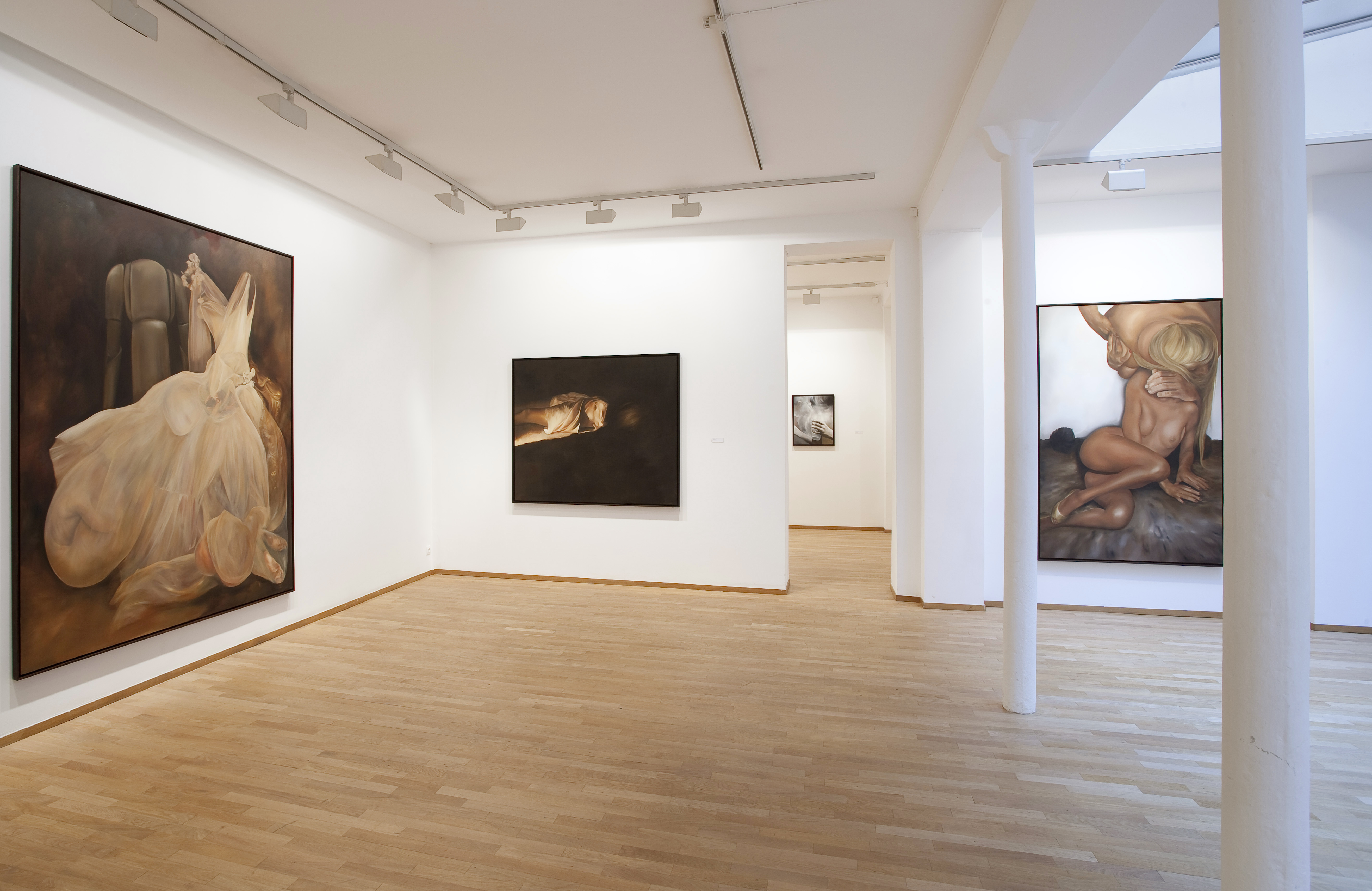
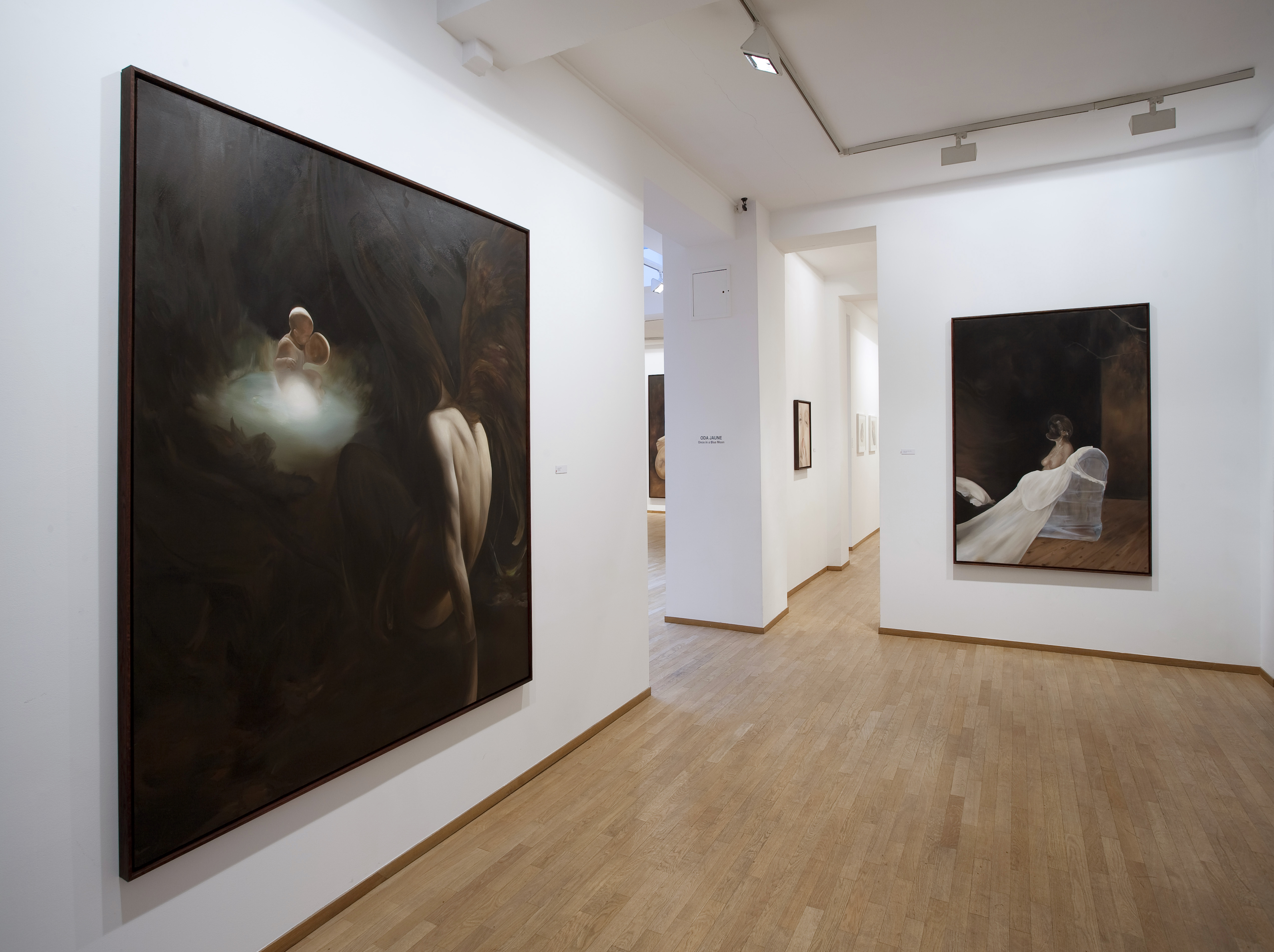
After the success of her first show last year, Oda Jaune returns with a major exhibition of her work at Galerie Templon.
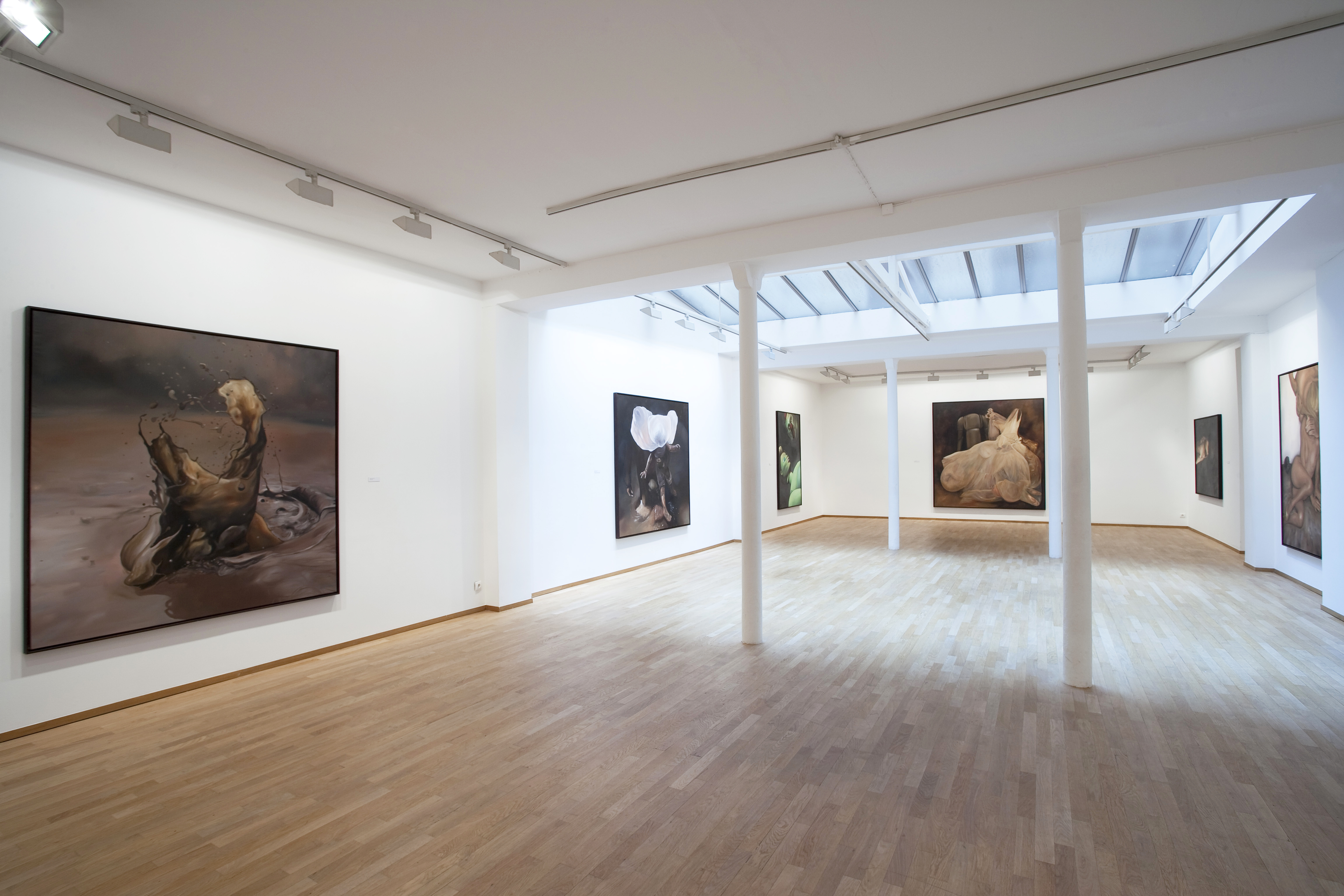
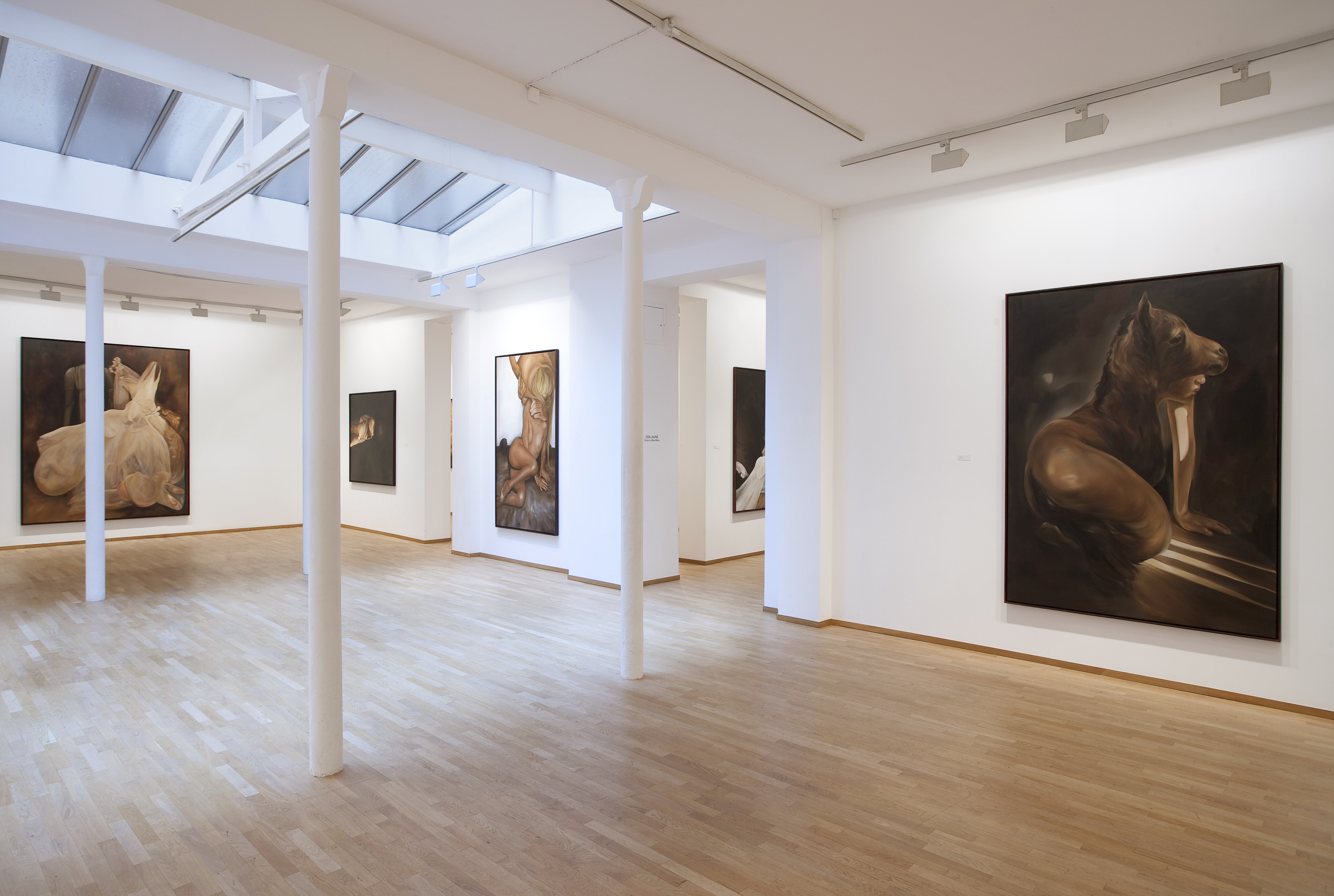
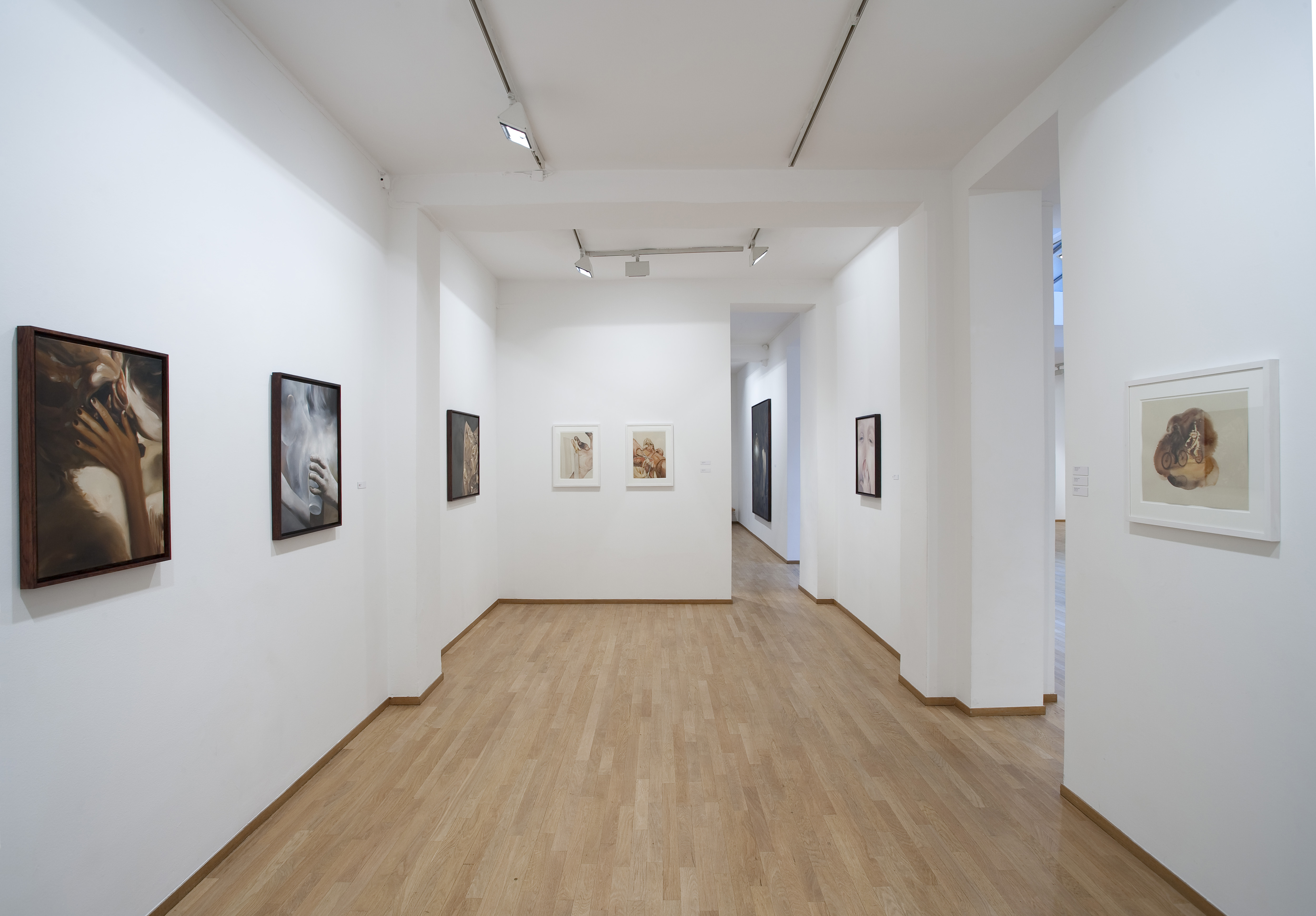
Recently having turned thirty, the Bulgarian artist has now set up home in Paris, a city which echoes her own poetic and tormented universe. Under the title Once in a Blue Moon, her exhibition includes twenty-odd works that straddle the space between surrealism and expressionism, and whose feigned naivety is often profoundly disturbing.
Deformed pin-ups, drowned children, nightmarish bridal couples… her paintings provide us with troubling scenes of intermingled gentleness and violence. They speak of a total lack of inhibition and demand that same self-abandonment from the viewer.
In the words of the artist: “I can perhaps salve the viewer’s fear […] I try to extract what is good, beautiful or even funny from my subjects, laden as they are with fear or prejudice.”
Fascinated by the theories attributed to Aristophanes in The Banquet, according to which the origins of love lie in the splitting in half of beings who then spend all their time searching for their lost other half, Oda Jaune adds: “I try to exteriorise a thought, a feeling, something that a person hides within them […]; some things exist and we have no idea what they look like.” In her search for the missing piece, she reveals elements that themselves have no shape.

The artist

Born in Sofia, Bulgaria, in 1979, Oda Jaune studied at the Kunstakademie Düsseldorf before developing an interdisciplinary practice spanning painting, sculpture and installation. She lives and works between London, Paris and Bulgaria.
Oda Jaune’s work is driven by a sustained inquiry into the instability of reality and the transformative potential of form. Rather than representing the visible world, she constructs new modes of existence in which the distinctions between body and object, organic and artificial, attraction and disquiet cease to remain fixed. Her works propose an expanded anatomy of life, where objects acquire corporeality, bodies dissolve into landscapes, and unfamiliar organisms emerge with an uncanny sense of intimacy.
While painting remains central to her practice, sculpture has become an increasingly significant field of investigation. Working with materials including bronze, ceramic and blown glass, Jaune explores the physical and metaphysical capacities of matter itself.
Without belonging to any single movement or tradition, Oda Jaune has developed a singular visual language in which beauty and estrangement coexist, and where imagination functions not as an escape from reality but as a means of generating new realities.