Oda Jaune
wOnderlust
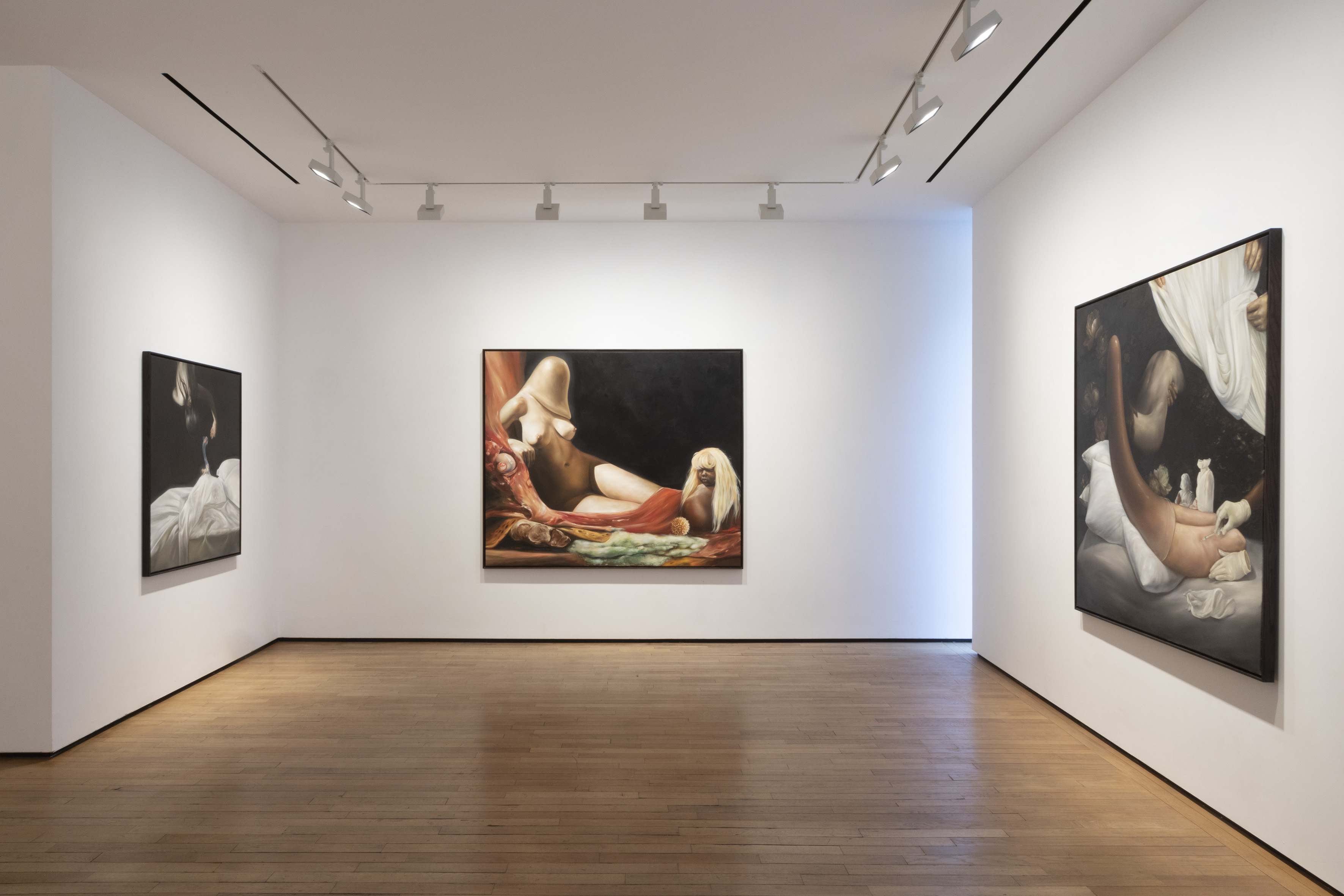
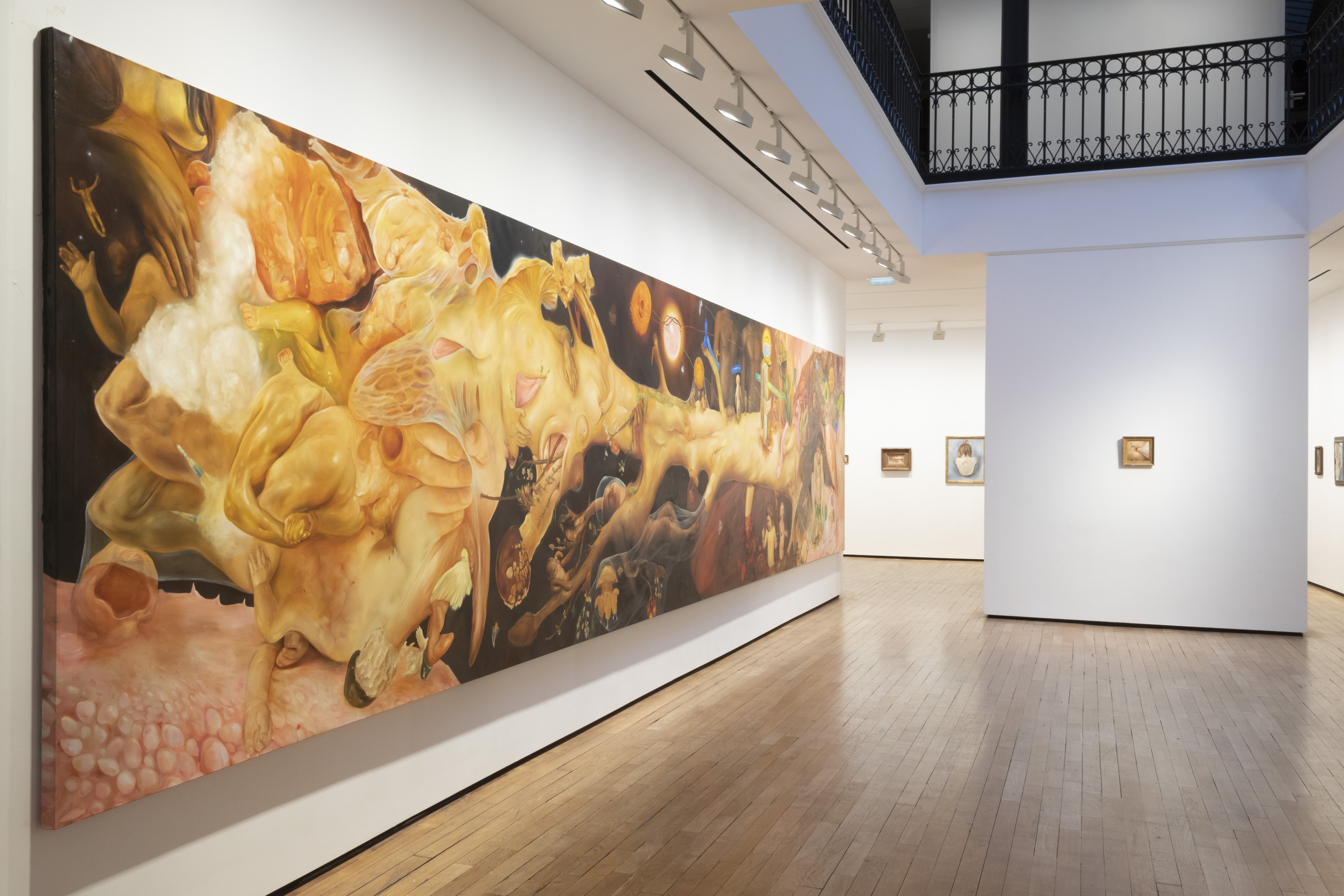
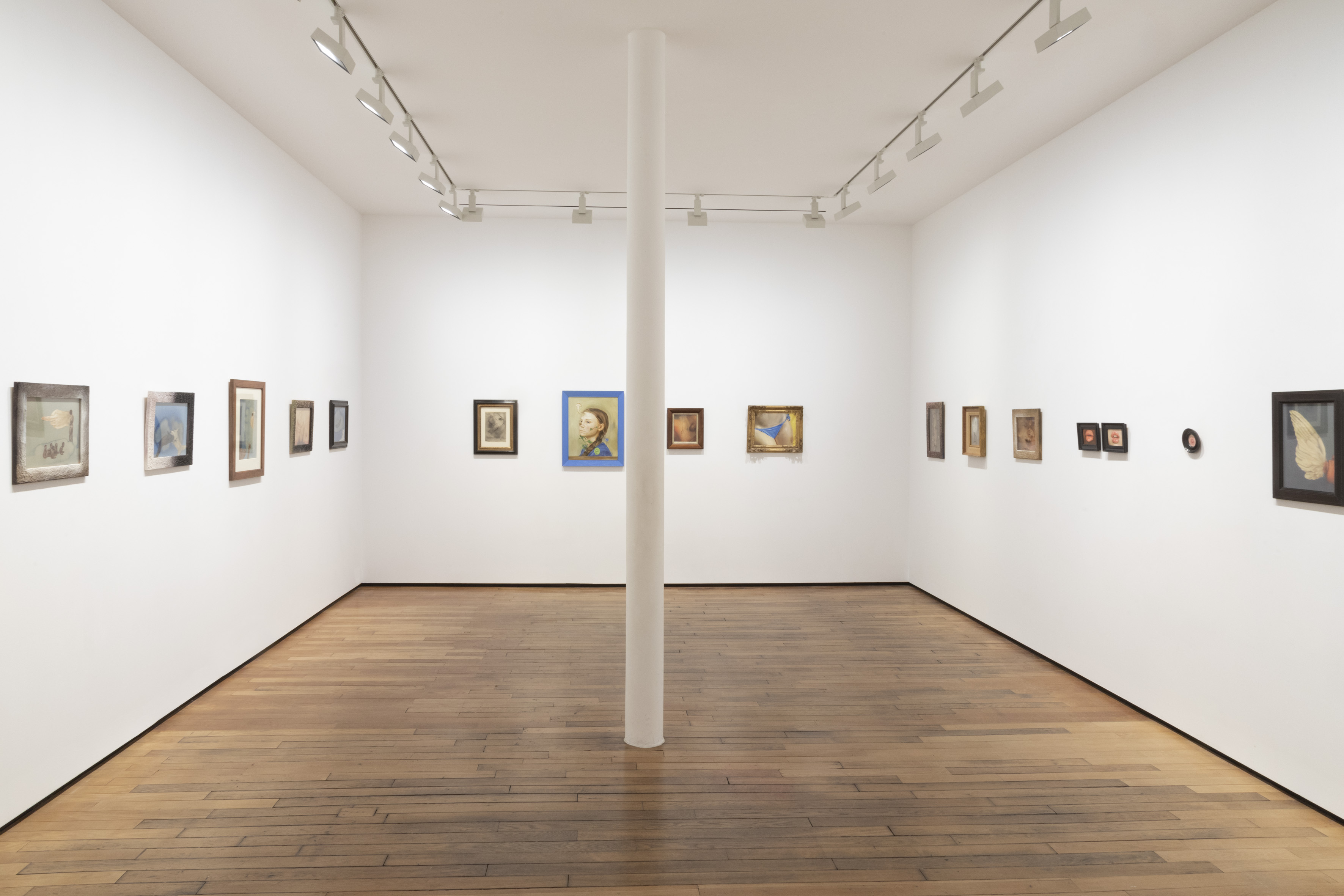
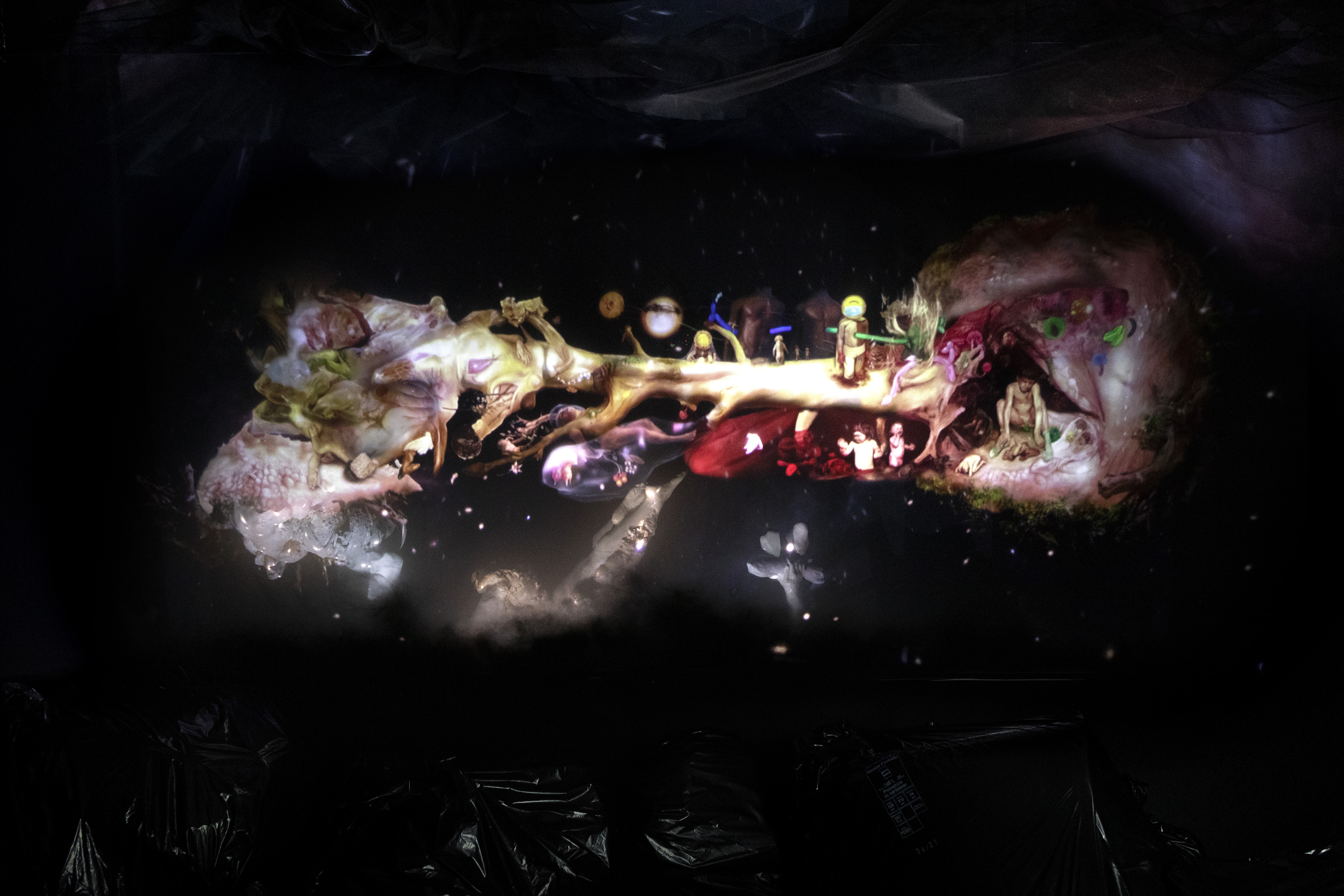
After a two-year absence, unconventional artist Oda Jaune is back, offering a Paris transformed by the pandemic wOnderlust, a powerful, dazzling new exhibition centring on a breath-taking 10-metre-long canvas and a life-sized hologram. The canvases, water colours and hologram together map out a fabulous journey, veering between the magical and the monstrous.


Originally from Bulgaria, Oda Jaune trained in Germany before adopting Paris as her home city. Over the last 10 years she has been one of the most intriguing figures on the European art scene. Her distinctive work, unshackled by convention, is part of the spectacular renaissance of figurative painting in France. Poetic, tortured, sometimes erotic or even unaffectedly feminist, her painting uninhibitedly explores the depths of the unconscious.
The recent health crisis and forced isolation led the artist to reexamine the evolution of the human race and its shifting relationship with the world.
As she explains, “After a year of the pandemic, I’m fascinated by the idea of the transformation of human beings and of nature into someone or something that is always new.” The exhibition’s central canvas is over 10 metres long, unfurling along the trunk of a metamorphosing tree populated by children, the world’s last survivors, engaged in enigmatic activities.
The gallery basement is home to Oda Jaune’s first incursion into the world of holograms. Part painting, part sculpture, the installation reveals a “tree of life” projected into the dark.

Mother earth

The artist

Born in Sofia, Bulgaria, in 1979, Oda Jaune studied at the Kunstakademie Düsseldorf before developing an interdisciplinary practice spanning painting, sculpture and installation. She lives and works between London, Paris and Bulgaria.
Oda Jaune’s work is driven by a sustained inquiry into the instability of reality and the transformative potential of form. Rather than representing the visible world, she constructs new modes of existence in which the distinctions between body and object, organic and artificial, attraction and disquiet cease to remain fixed. Her works propose an expanded anatomy of life, where objects acquire corporeality, bodies dissolve into landscapes, and unfamiliar organisms emerge with an uncanny sense of intimacy.
While painting remains central to her practice, sculpture has become an increasingly significant field of investigation. Working with materials including bronze, ceramic and blown glass, Jaune explores the physical and metaphysical capacities of matter itself.
Without belonging to any single movement or tradition, Oda Jaune has developed a singular visual language in which beauty and estrangement coexist, and where imagination functions not as an escape from reality but as a means of generating new realities.