Anthony Caro
The Kenwood Series
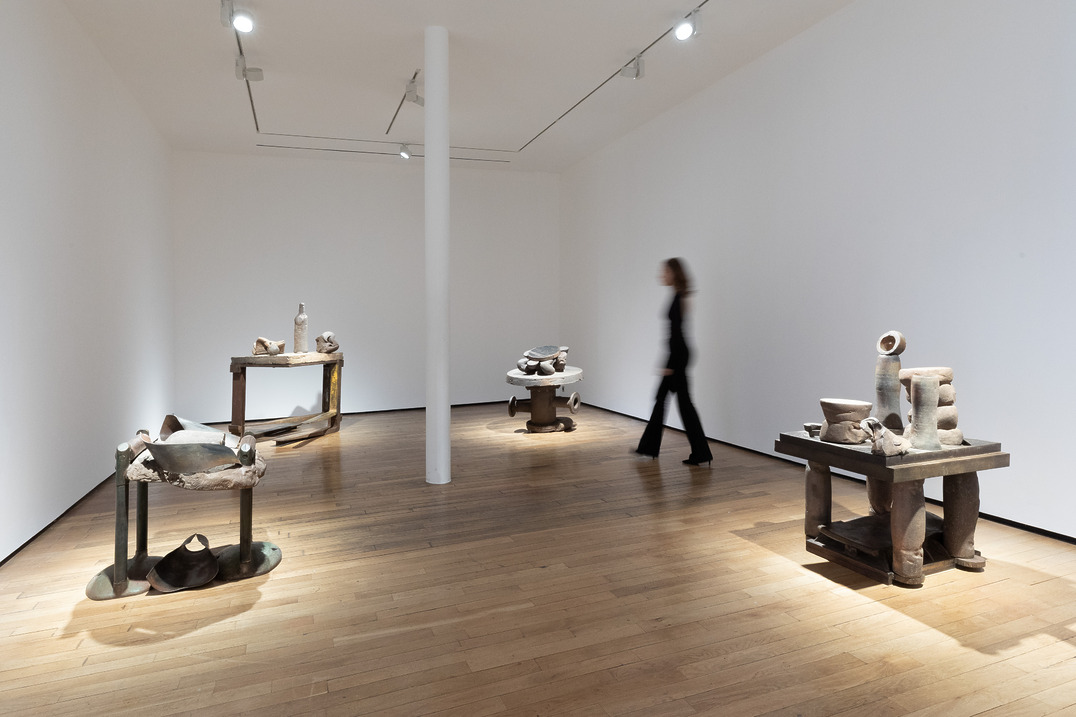
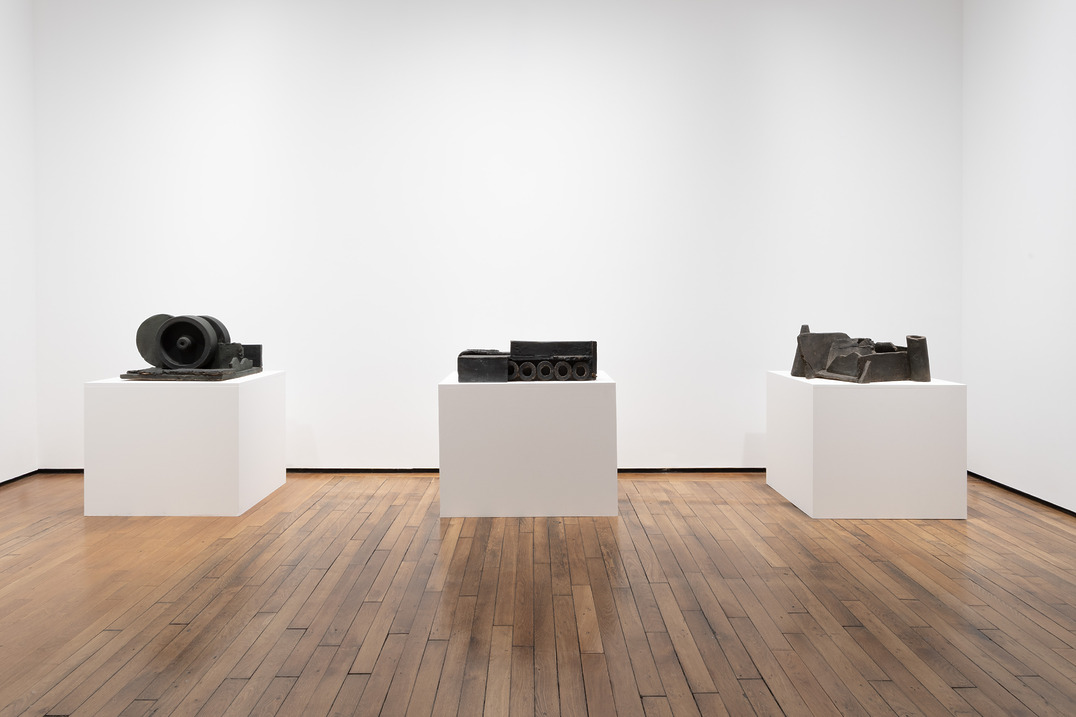
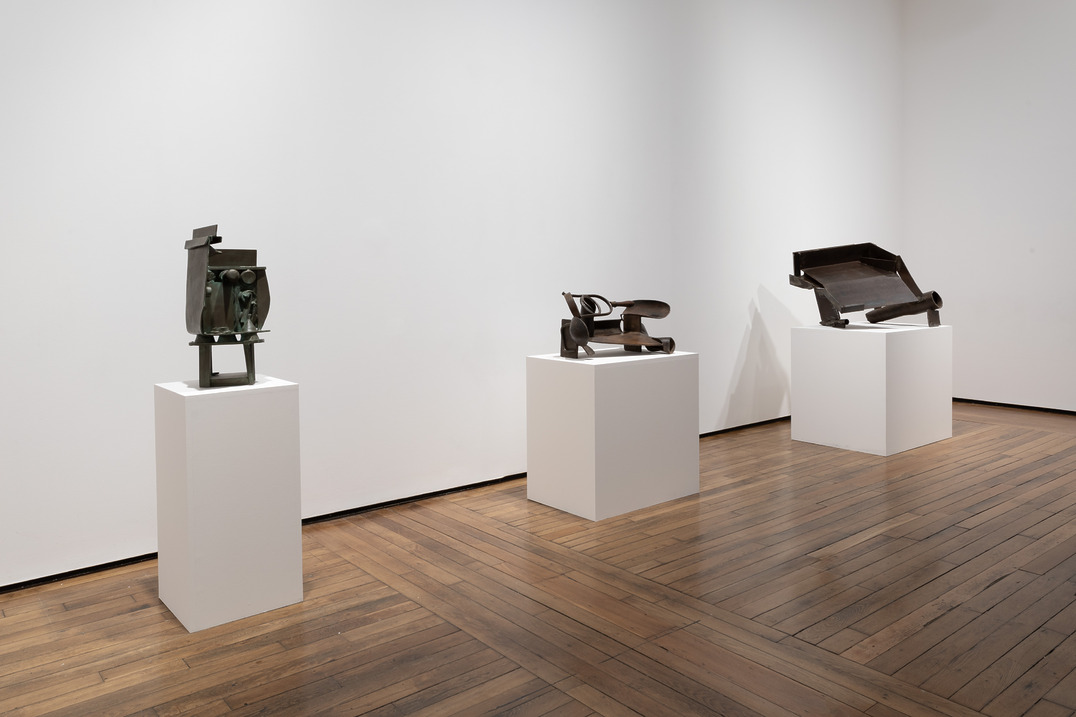
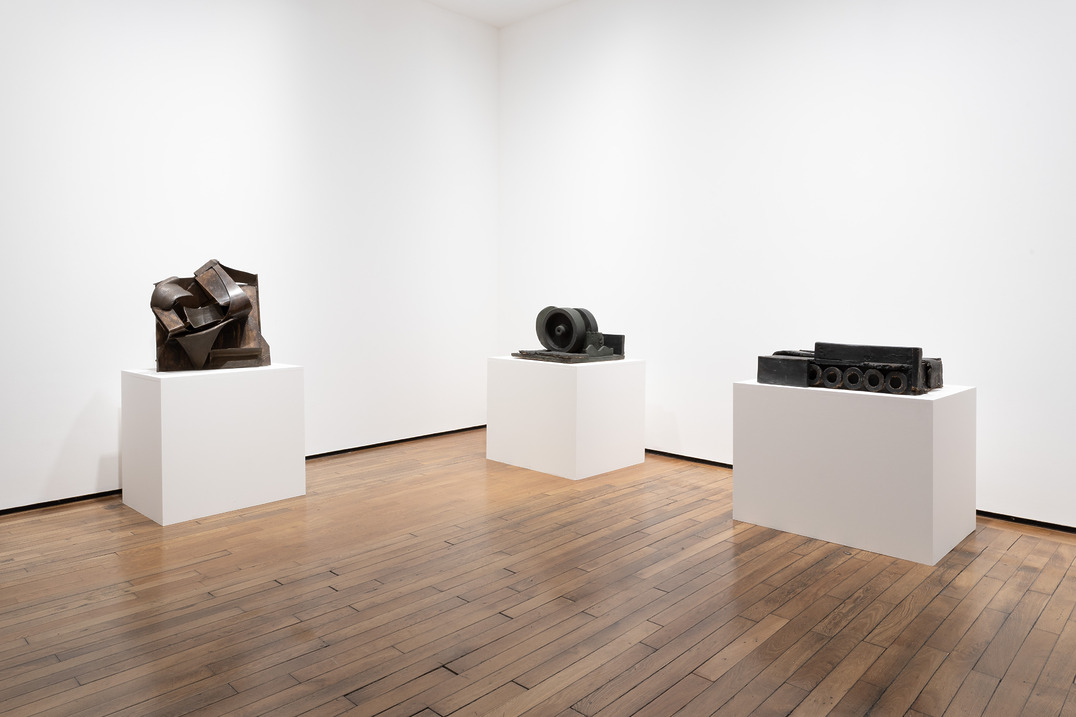
To inaugurate the 2026–2027 season, Templon presents a landmark exhibition dedicated to the British sculptor Sir Anthony Caro, bringing together in Paris for the first time a group of works from The Kenwood Series (2003–2004), one of the artist’s most significant late bodies of work and rarely exhibited in Europe.


Following decades devoted to abstract sculpture, the late 1990s marked a new chapter in Caro’s work. The Kenwood Series stands among the most accomplished expressions of this late period. In 2003, the artist worked alongside the German master ceramicist Hans Spinner near Grasse in the south of France. This collaboration proved transformative, introducing stoneware into dialogue with steel, the material that had become synonymous with Caro’s sculptural language.

Anthony Caro is widely recognized as one of the leading sculptors of the second half of the twentieth century. During the 1960s, he revolutionized sculptural practice by dispensing with the traditional pedestal and placing his works directly on the floor, fundamentally redefining the relationship between sculpture, space and viewer.
Throughout his career, Caro continually expanded the possibilities of sculpture through an extraordinary diversity of materials and forms. While his early work established him as a pioneer of abstraction, his later practice increasingly embraced allusions to the body, landscape and narrative.
Following decades devoted to abstract sculpture, the late 1990s marked a new chapter in Caro’s work. The Kenwood Series stands among the most accomplished expressions of this late period. In 2003, the artist worked alongside the German master ceramicist Hans Spinner near Grasse in the south of France. This collaboration proved transformative, introducing stoneware into dialogue with steel, the material that had become synonymous with Caro’s sculptural language.
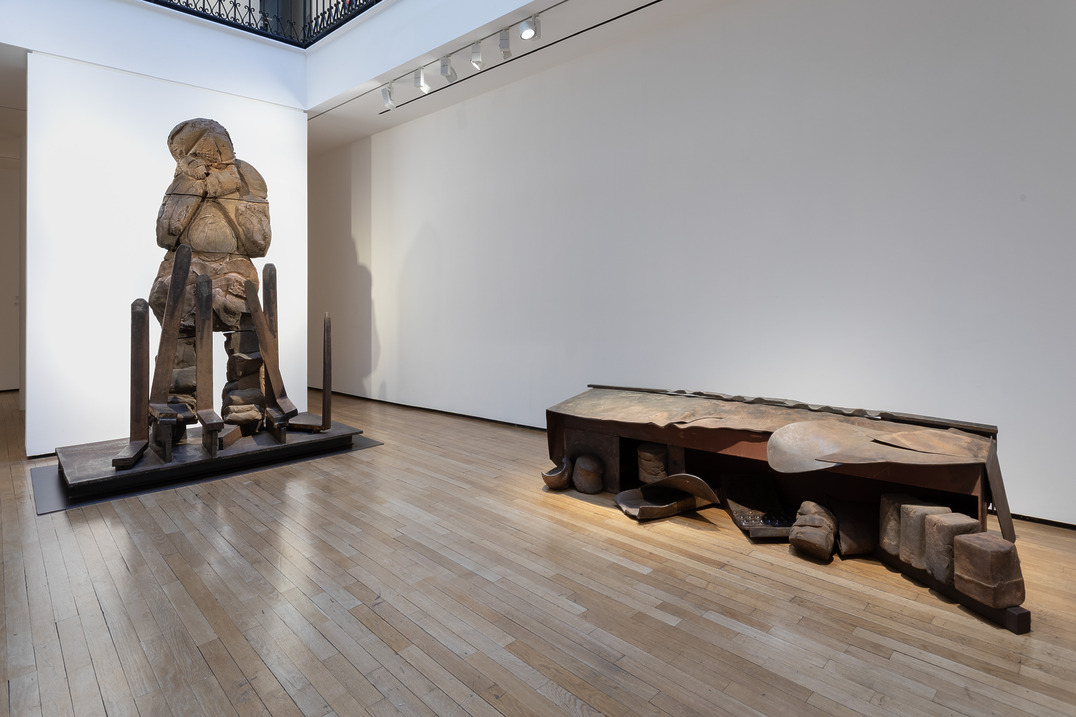
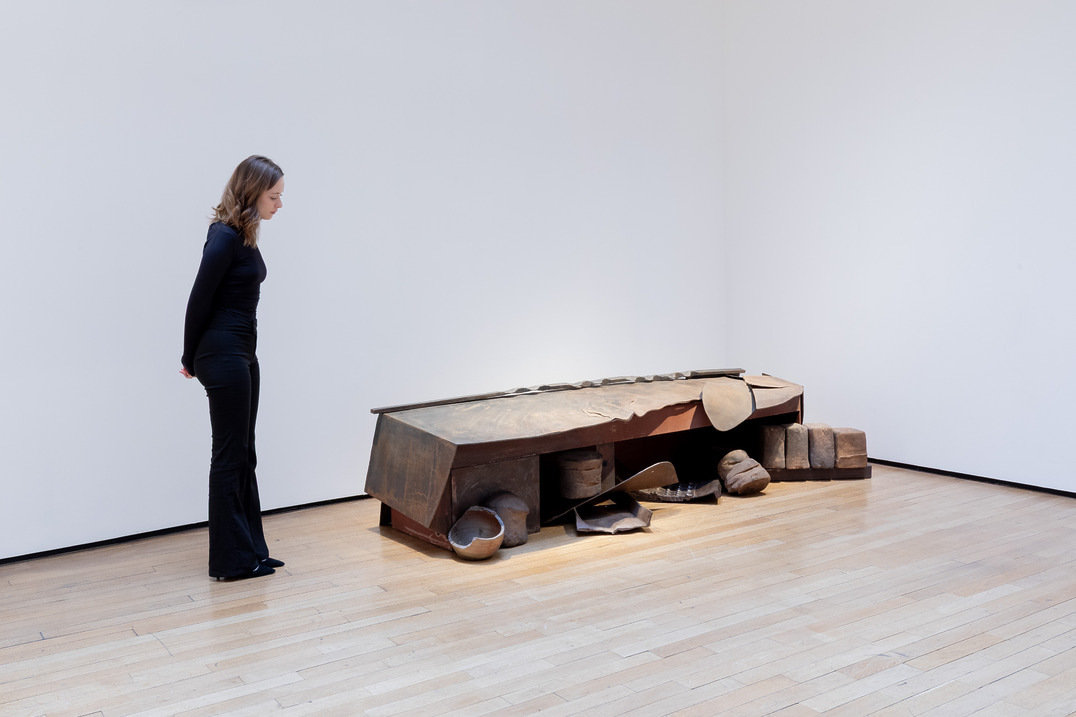
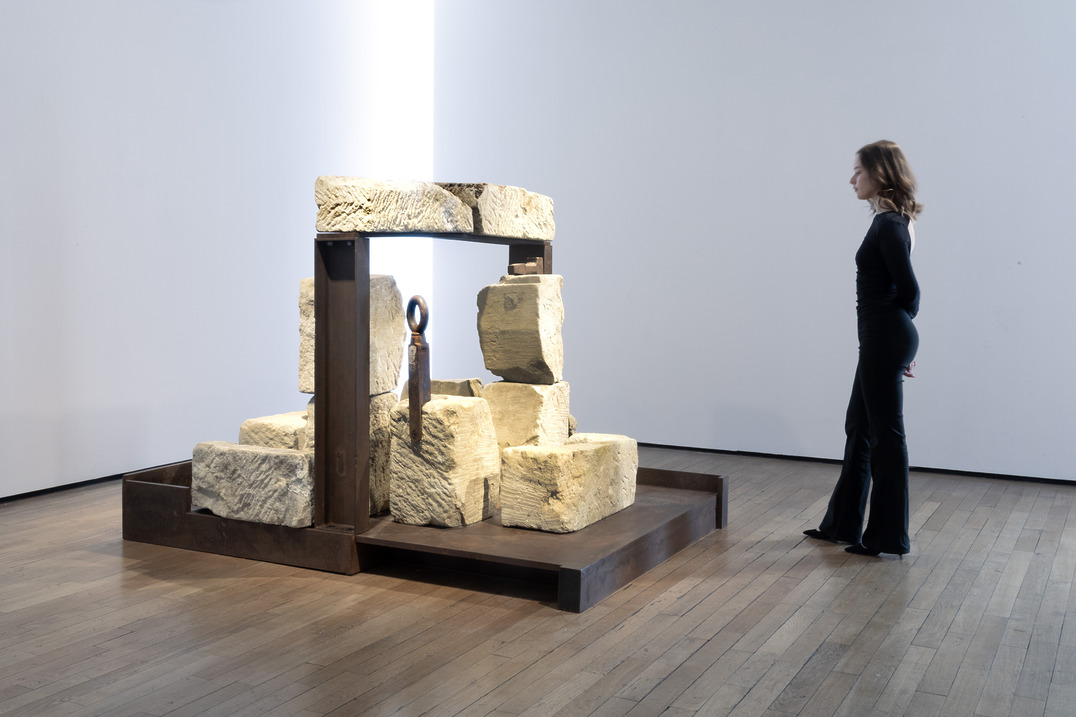
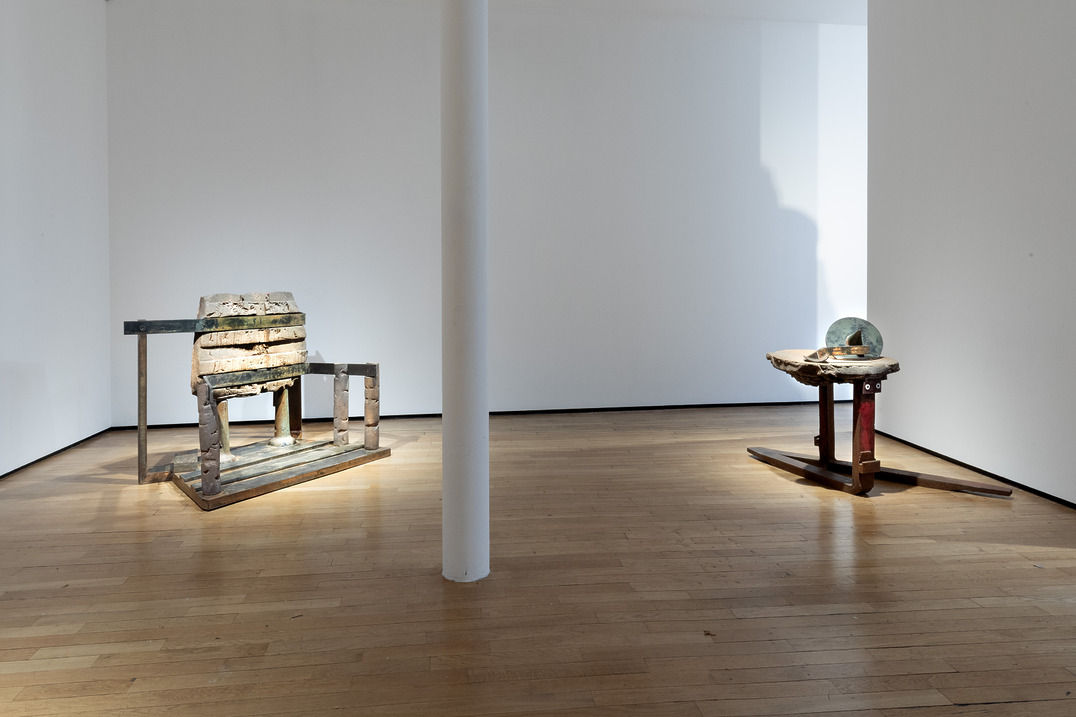
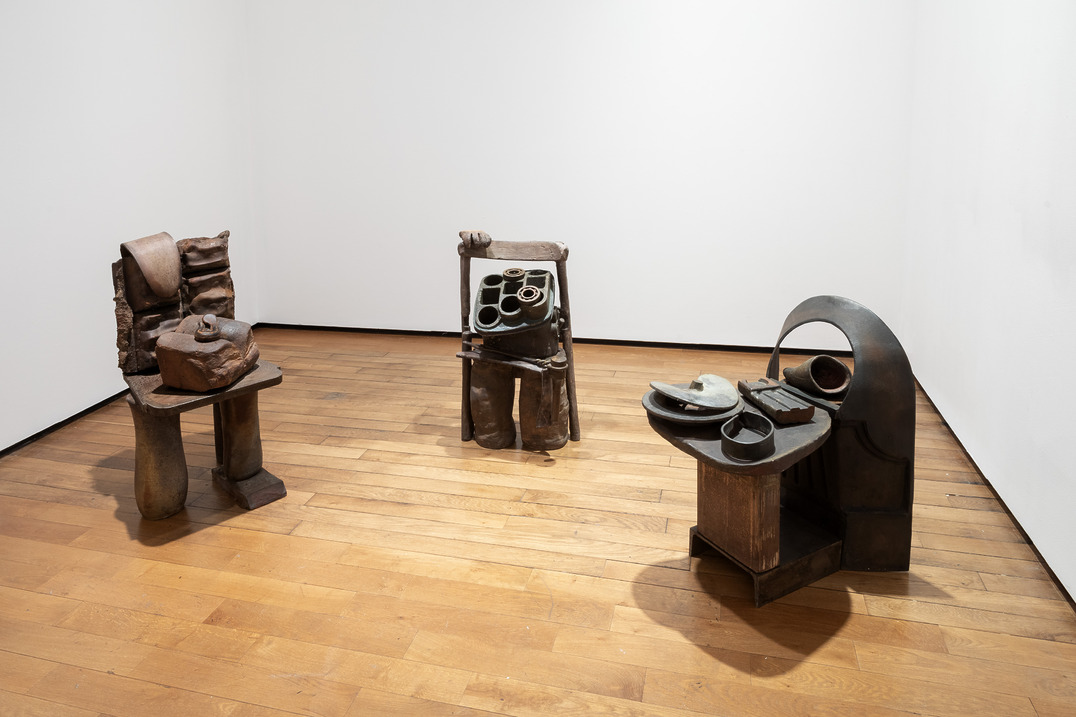
The thirteen sculptures presented at Templon’s Grenier Saint-Lazare gallery combine stoneware, stone and steel in compositions that evoke fragments of landscape and the human figure without ever becoming overtly representational. Together, they reveal Caro’s growing interest in figuration and narrative while maintaining the formal inventiveness that defines his work. For Caro, this move to figuration came out of his here and ‘right now’; he felt ‘the need for figures and real “stuff”’ as his visual field became increasingly engulfed by images of war (and its after-effects) in Kosovo, Afghanistan and Iraq.[1] At this time Caro became involved in anti-war campaigning.
The series takes its title from Kenwood House in London, where Caro first exhibited these sculptures. The experience of presenting his sculptures within the historic house and its surrounding landscape reflects his longstanding engagement with questions posed by the relationship between sculpture, architecture and site. Caro went on to make his last major architectural comission The Chapel of Light (2008), Bourboug, using the same materials of steel, clay and stone ; this project, built upon the material language of emotion that Caro developed in The Kenwood Series.
At the heart of the exhibition stands Witness (2003–2004), one of the most ambitious sculptures of the series. Measuring 2.80 by 2.20 meters, the monumental work appears to emerge from the ground, confronting visitors with a powerful physical presence. As Caro remarked, “It speaks to you in a one-to-one way”.[2] Rather than representing a recognizable subject, the sculpture invites viewers to pause, move around it and experience it bodily, transforming scale, light and surrounding space into integral elements of the work itself.
The Kenwood Series represents the culmination of more than four decades of experimentation, bringing together abstraction, figuration, architecture and material in a sculptural language of remarkable freedom and complexity. Presented together in Paris for the first time, these works offer a rare insight into the final and most poetic developments of Anthony Caro’s practice.
[1] Anthony Caro, “Caro in Conversation: New Sculpture,” interview by Julius Bryant, Anthony Caro: A Life in Sculpture, (Merrell, 2004), p. 24.
[2] Anthony Caro, Upright Sculptures, exh. cat. 2010, p.16.

Bankers’ Table (The Kenwood Series)

The artist

Anthony Caro was born in 1924 in New Malden, England, and died in 2013. Considered to be one of the greatest sculptors of the last fifty years, Sir Anthony Caro took the norms and even the definitions of sculpture in new directions. He experimented with a wide range of different materials, such as sculptures made from welded or assembled metal parts, painted metal constructions and bronze table-top pieces. His work is rooted in a radical exploration of space.